Workday fragmentation
When the working day is split into many small, scattered pieces.

Workday fragmentation describes the shape of a working day rather than the contents of it. A fragmented day is one where the work is scattered across a wide span of hours, often starting early, ending late, and reopening in the evening or on the weekend, with the active stretches broken into many small pieces separated by meetings, gaps, and switches in context.
It is a distinct concept from focus fragmentation. Focus fragmentation looks inside a working block and asks how often attention is broken. Workday fragmentation steps back and asks what the whole day looks like on a calendar, including how much of it falls outside what would once have been considered working hours.
What is workday fragmentation?
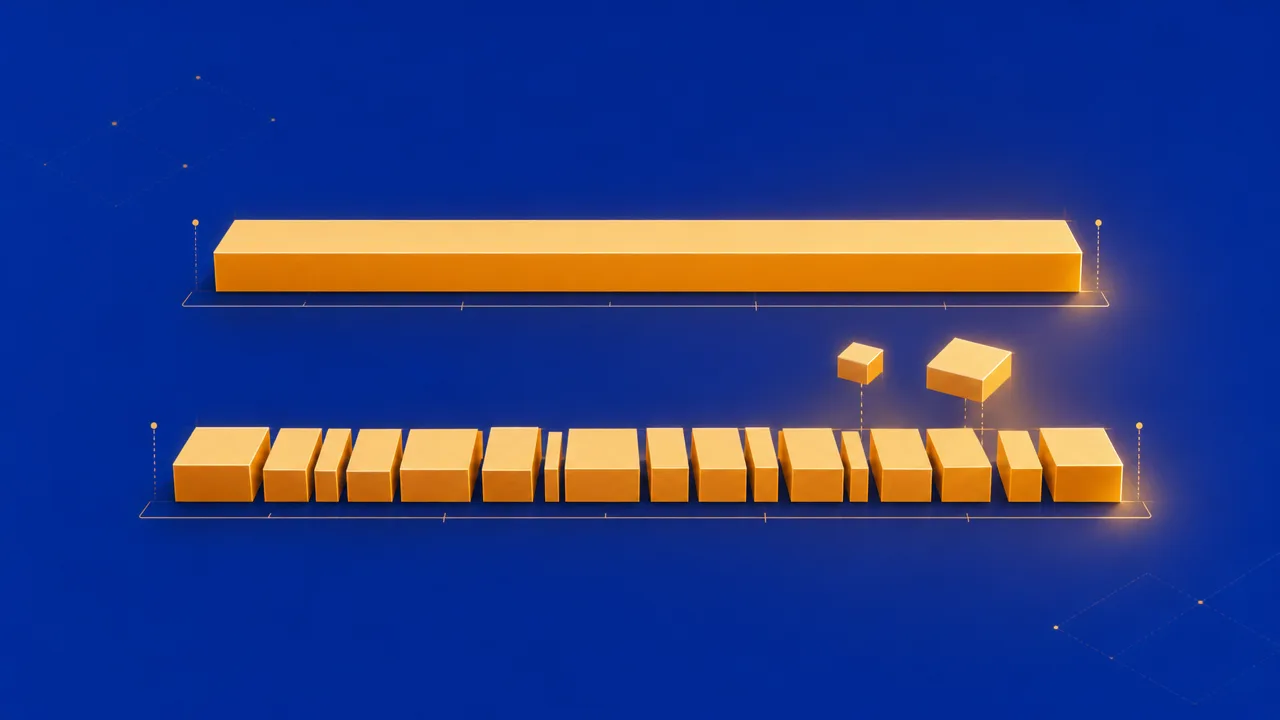
Workday fragmentation is the condition in which the overall working day is broken into many small, non-contiguous pieces. It has two related dimensions. The first is span: the distance between the first and last action of the day, often stretching well beyond a traditional eight or nine hour shift. The second is granularity: how many distinct working pieces fit inside that span, and how short each piece is.
A long but neatly bounded day, with one block in the morning and one in the afternoon, is not strongly fragmented. A day of similar total active time, broken into thirty short pieces scattered between meetings, messages, after-hours catch-up, and a quick weekend email, is highly fragmented even if the total hours are lower.
The distinction from focus fragmentation matters. Focus fragmentation is about the integrity of a focus block: how often it is interrupted, how often the foreground application changes, how often attention residue from a prior task bleeds into the current one. Workday fragmentation is about the integrity of the day: how confidently a person can say when they are working and when they are not.
Why does workday fragmentation matter?
A heavily fragmented day tends to be experienced as both long and unproductive. The span is large because work has migrated into the early morning, the late evening, and the weekend. The output is often modest because each piece is too short to support sustained thought. The result is the now familiar complaint that the workday never seems to end, but also never seems to make progress.
For individuals, workday fragmentation is one of the strongest leading indicators of burnout. It chips away at recovery time, which is the actual cost of after-hours work. A person who finishes their last message at 22:30 has, in practice, very few hours before tomorrow begins, even if the calendar still claims the next workday starts at 09:00.
For teams and organisations, fragmentation tends to show up as drag rather than as crisis. Decisions move slowly because each contributor only has small windows in which to attend to them. Reviews slip because the reviewer never finds a contiguous hour. The work eventually gets done, but at a higher cost in elapsed calendar time and a higher cost in energy spent per hour produced.
How is workday fragmentation measured?
Most measurement starts from a per-minute or per-five-minute timeline of active time across the day. From that timeline several specific quantities can be derived, each one capturing a different facet of how scattered the day actually is.
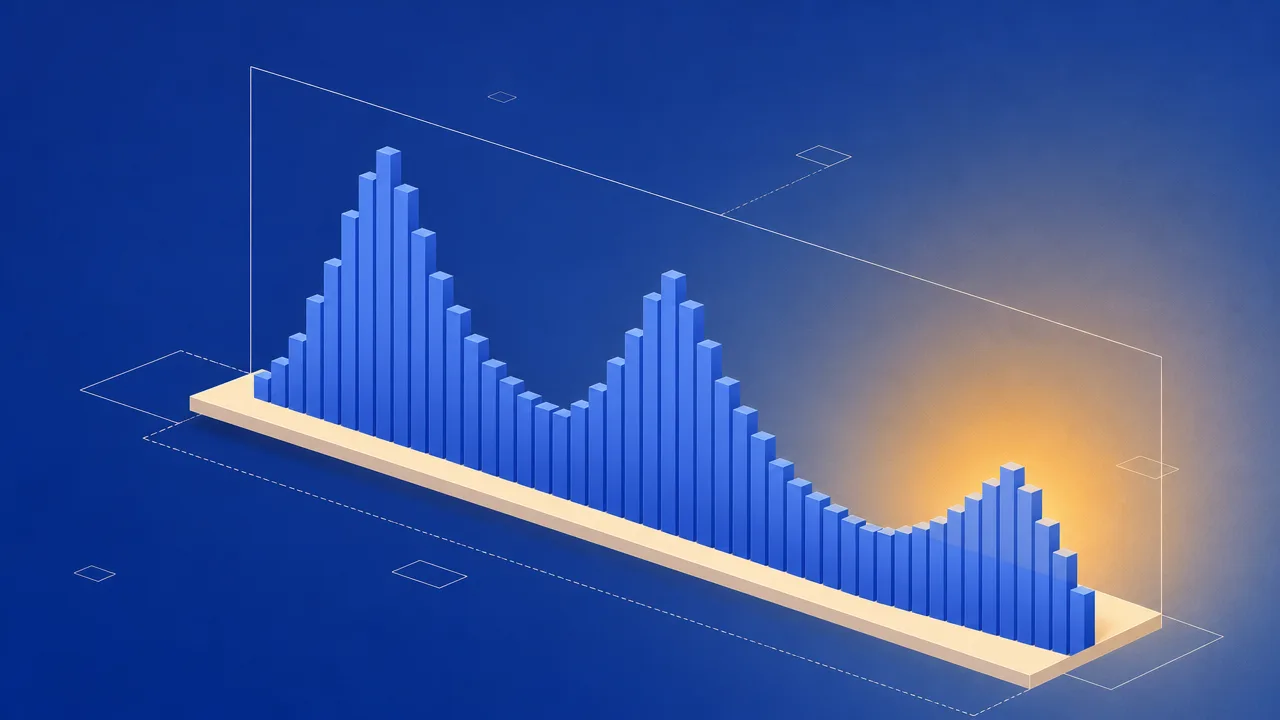
The first family of measures looks at active-time distribution across the clock. A histogram of active minutes by hour of day will show, for a clean day, a single block roughly between 09:00 and 17:00. A fragmented day shows mass smeared across early morning, late evening, and, sometimes, into Saturday and Sunday. The ratio of active time inside core hours to active time outside them is a useful single number.
The second family looks at edge times: when the first action of the day happens, when the last action of the day happens, and the difference between them. The span is a more honest representation of the working day than a self-reported start and finish. People consistently underestimate how late they were still touching their computer.
The third family is gap analysis. The timeline is cut into runs of active time separated by gaps of a configurable size. The number of runs, the median run length, and the long-tail distribution of gaps describe granularity. A day with many short runs and many short gaps is fragmented even if the total active time looks reasonable.
Finally, after-hours bumps and weekend creep are tracked separately. The share of weekly active time that falls into evenings, nights, and weekends is a leading indicator of fragmentation creeping in even when the core workday still looks intact. It is also the part most strongly associated with the so-called triple peak day.
Common benchmarks
Benchmarks for the overall shape of the workday have become more numerous since 2020. The figures below describe widely cited population-level patterns; individual variation is large.
- Microsoft's 2025 special report Breaking Down the Infinite Workday describes a triple peak day in which message and meeting activity rises in the morning, again around the early afternoon, and a third time late in the evening, with nearly a third of active workers back in their inboxes by around 22:00.
- The same Microsoft research reports that meetings after 20:00 have risen roughly 16% year over year, and that the average employee sends or receives more than fifty messages outside core business hours.
- NBER Working Paper 27612, Collaborating During Coronavirus, found that the average workday length increased by approximately 8.2%, or roughly 48 minutes, in the months following the start of the pandemic, with the additional time concentrated at the edges of the day rather than in the middle.
- NBER Working Paper 29598 documented that, during the same period, contributors were considerably more likely to be working on weekends and outside the traditional 09:00 to 18:00 window, particularly in the early months of the shift to remote work.
- Slack's Workforce Index has repeatedly found that around 37% of desk workers log on outside of company standard hours at least weekly, and that more than half of those who do so report feeling pressure to do so rather than choosing to. Employees who log off at the end of the workday score around 20% higher on the survey's productivity measure than those who work after hours.
- Atlassian's State of Teams research has found that close to half of employees and a majority of leaders describe their work as chaotic or fragmented, with meetings concentrated in the same peak windows that individuals would otherwise use for focused work.
These benchmarks describe averages and tendencies, not targets. The right comparison for any one person is almost always the shape of their own week over time rather than a single industry number.
Examples
A few worked examples make the difference between focus fragmentation and workday fragmentation concrete.
A senior engineer starts the day at 08:30 with code review, attends meetings from 10:00 to 12:00, codes until 17:30, and closes the laptop. Inside the coding stretches their attention is broken by chat messages every ten minutes, so their focus is fragmented. The day itself, however, is not fragmented: it starts and ends at predictable times and contains a small number of large pieces.
A team lead checks email at 07:00, runs meetings from 09:00 to 11:00, picks up a child at 15:00, attends another meeting at 17:00, answers messages from 21:30 to 22:15, and sends a final approval at 23:10. Total active time may be moderate, but the day spans sixteen hours and contains many short pieces. This is a classically fragmented workday, with an evening peak that mirrors the pattern Microsoft has described.
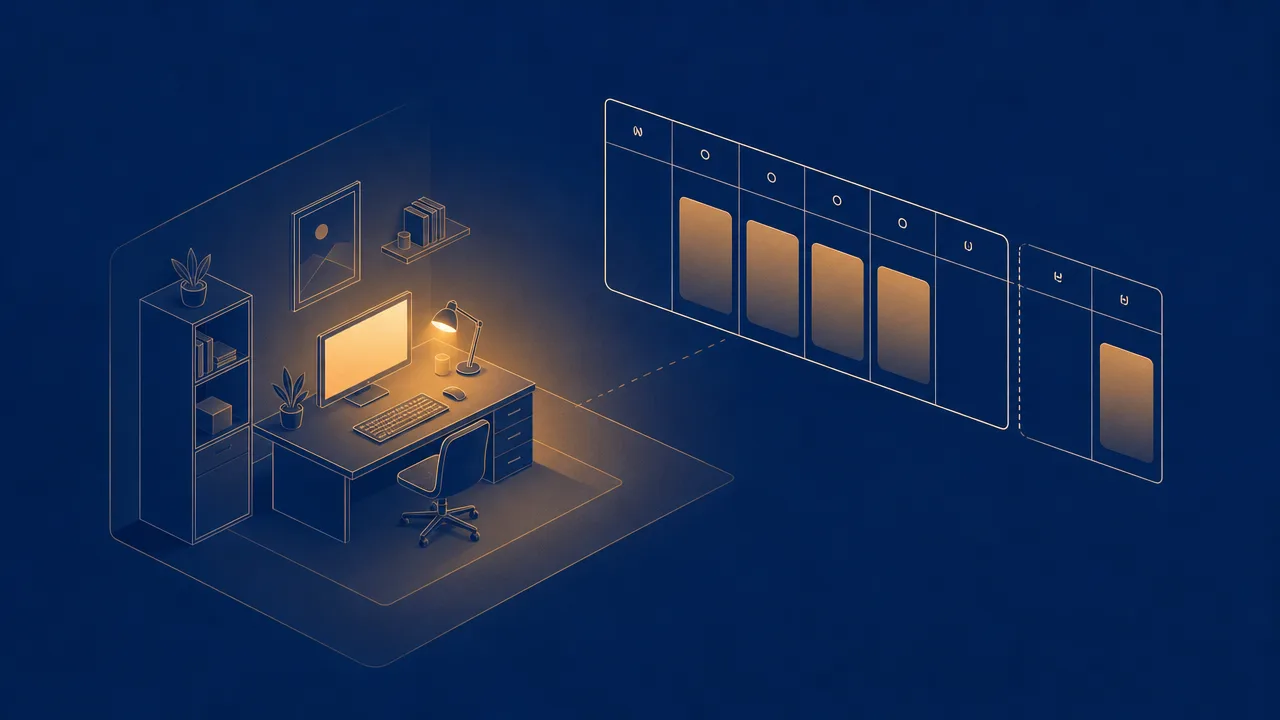
A consultant uses a deliberate split shift: focused writing from 07:00 to 11:00, a long midday break, then client work from 15:00 to 19:00, with nothing after that. The span is twelve hours, but the day has only two pieces, both of them substantial. This is intentional flexibility rather than fragmentation, and a good measurement system should not conflate the two.
Misconceptions
The most common misconception is that workday fragmentation and flexibility are the same thing. They are not. Flexibility describes how much choice a person has over when they work. Fragmentation describes how scattered the resulting day actually is. People with high flexibility can produce very unfragmented days, and people with low flexibility can be highly fragmented by reactive interruptions.
A second misconception is that any wide span automatically counts as fragmentation. A deliberate split shift, like the consultant example above, may stretch across many clock hours but consist of only two large blocks. The harm associated with fragmentation comes from the granularity, not from the span alone.
A third misconception is that an evening burst is the same as the rest of the work. It is not. The evening and night peaks compete with recovery time, not with other work, and the same number of minutes worked at 22:00 cost more than the same minutes worked at 14:00. Structural flexibility recognises this; always-on availability does not.
A fourth misconception is that fragmentation is only a problem if total hours go up. The Microsoft and Slack data both suggest that fragmentation can rise even when total active time stays roughly flat. The shape of the day has changed even when its mass has not.
Related concepts
Workday fragmentation sits inside a broader vocabulary of computer-activity and attention metrics. Understanding it well usually means understanding the neighbouring ideas.
- Focus fragmentation: breakage inside a single focus block, not across the day.
- Focus time: contiguous active time on a single task or application.
- Deep work: extended focus time spent on cognitively demanding output.
- Active time: the raw signal that workday fragmentation is computed from.
- Activity trends: long-running views of how the shape of the day changes over weeks.
- Session length: the duration of a single uninterrupted period of active use.
- Context switching: how often the foreground application changes within active time.
- Digital overload: the felt experience of too many channels demanding attention at once.
- Notification fatigue: reduced sensitivity to alerts, often a driver of after-hours checking.
- Attention residue: the cognitive carry-over from a prior task into the current one.
Tracking workday fragmentation
Workday fragmentation can be tracked from the same underlying signal that powers active time. Any local tool with permission to observe input events can timestamp the moments at which the keyboard and mouse were used and aggregate those timestamps into a per-minute or per-hour view of the day. WhatPulse is one such tool: it runs locally on Windows, macOS, and Linux, records activity against the foreground application, and exposes the resulting shape of the day in its own dashboard.
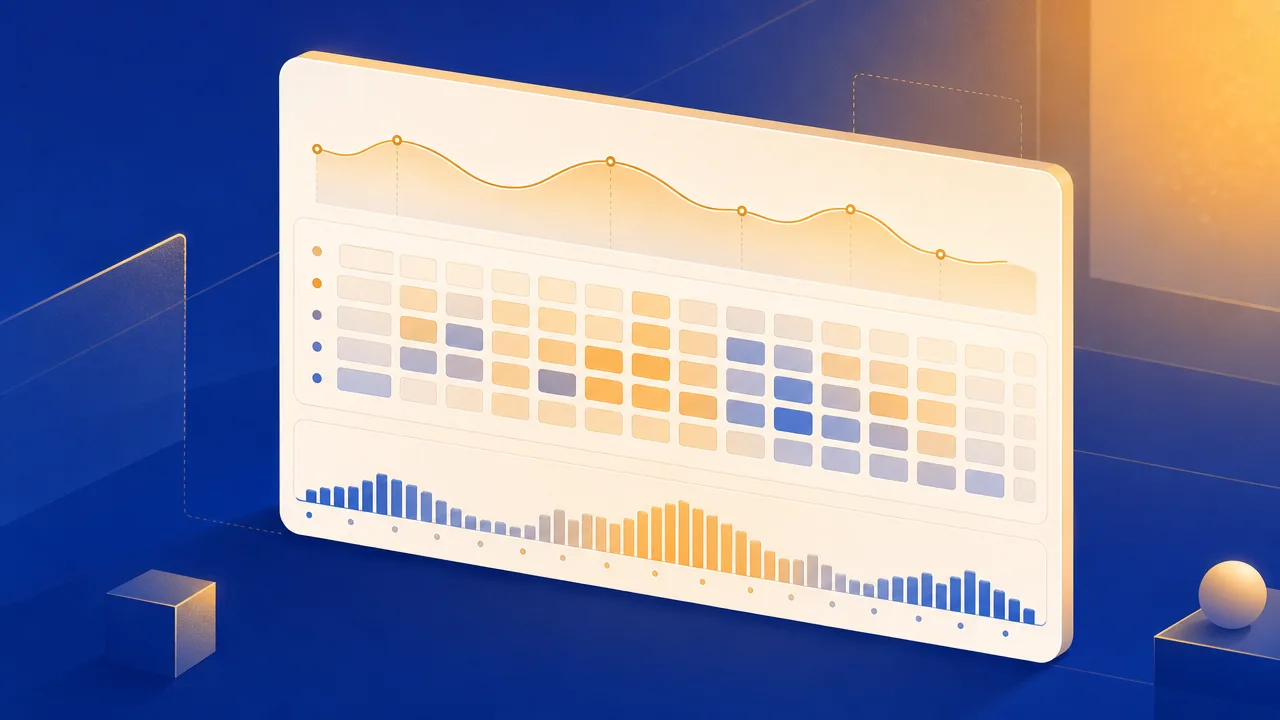
Once the per-minute timeline exists, the fragmentation views are straightforward. A daily activity strip shows where in the day the work actually happened. A weekly heatmap shows whether the same shape recurs. A trend line of day span over weeks shows whether the working day is creeping outward. The after-hours share is then a single derived number from the same data.
The goal of measuring workday fragmentation is not to optimise the day to a target. It is to make the current shape visible. People who can see their own pattern tend to make small, durable changes to it, such as protecting the morning, closing the laptop earlier, or refusing the late evening peak. The data is a mirror, not a scoreboard.
Frequently asked questions
Is workday fragmentation the same as focus fragmentation?
No. Focus fragmentation describes individual focus blocks being broken by switches and interruptions within a session. Workday fragmentation describes the overall shape of the day, including when it starts, when it ends, and how scattered the active periods are across the calendar.
Is a long working span always a sign of fragmentation?
Not necessarily. A deliberate split shift, with a clear morning block and a clear evening block, can be long in span without being fragmented. Fragmentation refers to the number and scattering of pieces, not just the distance between the first and last action.
Does flexible work cause workday fragmentation?
Flexibility allows fragmentation but does not require it. People with structured flexibility tend to concentrate their work in fewer, longer blocks. People with reactive flexibility tend to spread it thinly across the day and into the evening.
What is the triple peak day?
It is a pattern identified in Microsoft Telemetry data, where work activity peaks in the morning, peaks again in the early afternoon, and then rises a third time late in the evening. Microsoft has described this as a feature of the so-called infinite workday.
Does after-hours work always mean fragmentation?
Occasional after-hours work for a deadline is not fragmentation. A regular evening peak, especially when it follows a full daytime workload, is one of the clearest fragmentation signals because it extends the span of the day and adds a new piece to it.
Can workday fragmentation be measured without spyware?
Yes. A local activity tracker only needs the timestamps of when input was registered. The shape of the day, the gap distribution, and the after-hours share can be derived entirely on the device, without recording content or sending data anywhere.
Is reducing workday fragmentation the same as working less?
No. The goal is usually to fit the same amount of work into a tighter, more deliberate shape. People who reduce fragmentation often report the same output in fewer hours, because the contiguous blocks are more productive than scattered minutes.
Conclusion
Workday fragmentation is a description of the shape of the day, not the contents of any one block inside it. It captures how widely work is spread across the clock and the week, and how many small pieces it has been broken into along the way. It is distinct from focus fragmentation, which describes interruption inside a block, and it is distinct from total hours, which describes mass rather than shape.
Measured carefully, from a simple per-minute view of active time, it is one of the more honest signals a personal activity tracker can produce. It will not tell anyone whether their work is good. It will tell them, accurately and without flattery, what their working day actually looks like, and whether that shape is the one they meant to live with.