Focus time
Continuous active time on a single application or task, free of switching and interruption.
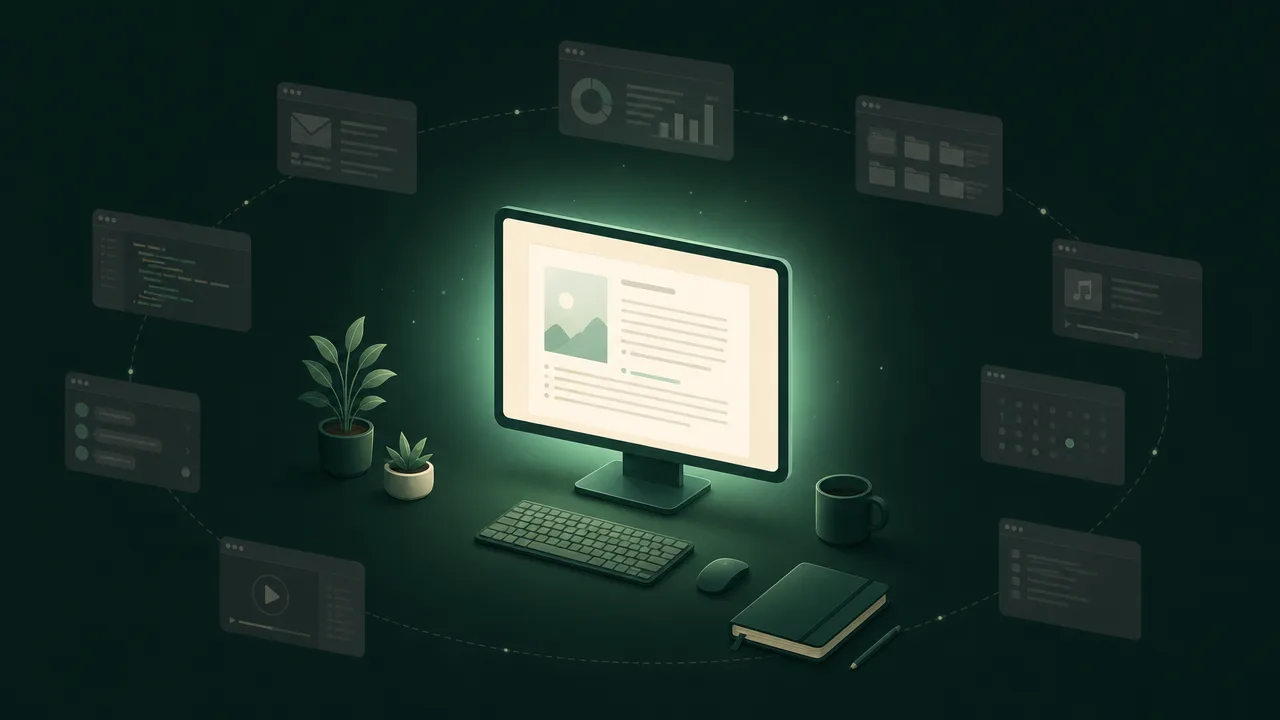
Focus time is the productivity metric most people mean when they talk about getting real work done. It captures the stretches of the day when a person stays on a single application or task for long enough that the activity adds up to something more than scattered effort. Where active time tells you whether the keyboard and mouse were moving, focus time tells you whether that movement was pointed in one direction.
This page covers what focus time is, why it is harder to come by than it used to be, how trackers actually measure it, what benchmarks the research literature offers, and how it connects to the wider family of attention and computer-activity metrics.
What is focus time?
Focus time is a continuous block of active computer use during which the foreground application, or sometimes the foreground task category, does not change for longer than a configured minimum duration. It is built on top of active time and the foreground-application signal: any period that would already count as active time, and that stays anchored to one application or project, accrues as focus time once it crosses the threshold.
The exact rules vary. Some tools require strict adherence to a single executable, while others group related applications into a task or category and treat moves within that group as part of the same focus block. Most allow brief excursions, a quick reference lookup or a glance at a chat window, before they declare the block finished. The point is to recognise sustained attention without being defeated by every minor switch.
Focus time is not the same as deep work. Deep work, in Cal Newport's framing from his 2016 book of the same name, also requires that the task be cognitively demanding and that the output be valuable. Focus time is the observable shadow of deep work in a usage tracker. Watching a long video uninterrupted is focus time. So is writing a difficult report. Only the second is also deep work.
Why does focus time matter?
Most cognitively demanding work has a fixed cost of entry. Loading a problem into working memory, recalling the relevant context, and reaching a productive state all take time. Once that cost has been paid, additional minutes on the same task are the cheapest minutes of the day. Once the focus block is broken, the cost has to be paid again. Focus time, as a metric, captures how many of those expensive setup costs were actually converted into useful runtime.
Gloria Mark's 2008 paper "The Cost of Interrupted Work" with Daniela Gudith and Ulrich Klocke found that people who are interrupted complete tasks in less time but pay for it with significantly more stress, frustration, and effort. Her later research, summarised in her 2023 book "Attention Span", reports that the average attention span on a single screen has fallen to about 47 seconds, down from roughly two and a half minutes two decades earlier. Against that backdrop, even modest focus blocks are an achievement.
For individuals, focus time provides a more meaningful signal than raw active time. A day with seven hours of active time but no block longer than ten minutes is a day spent reactive, not productive. The same seven hours with two ninety-minute focus blocks is structurally different, even if the total is identical. Focus time makes that difference visible.
How is focus time measured?
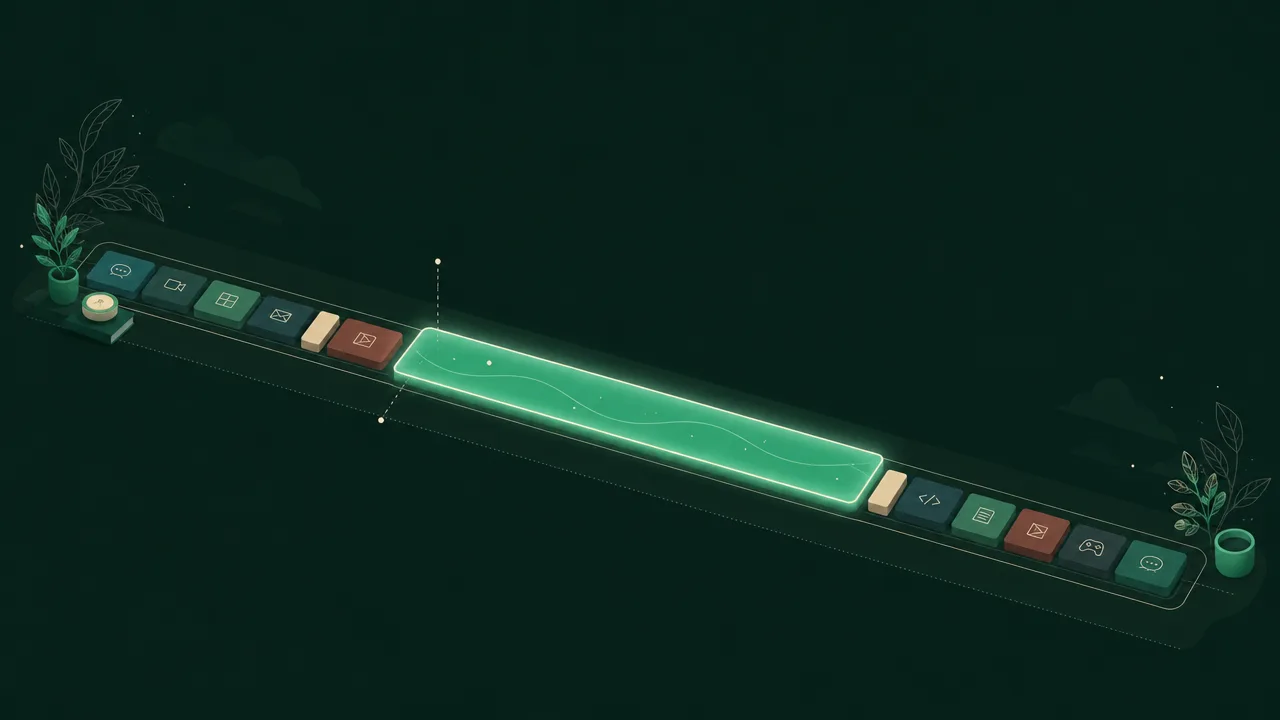
Internally, focus time relies on two signals from the underlying system. The first is the active-time signal: a session counts only while the user is providing input within the idle threshold. The second is the foreground-application signal: every time the focused window changes, the tracker records the switch. A focus session begins when active time starts accruing against one application. It ends when the user goes idle, or when the foreground application changes to something outside the current focus group for longer than a small grace window.
The minimum duration that qualifies as focus time is the most consequential setting. RescueTime, in its Focus Sessions feature, treats focus blocks as discrete user-started intervals. ActivTrak and Worklytics typically use rolling thresholds in the range of fifteen to thirty minutes of continuous engaged work on the same productive category. Microsoft 365's Viva Insights surfaces "focus hours" that look for uninterrupted stretches of at least two consecutive hours without meetings or messages.
Trackers also differ on how strict the switching rule is. A strict implementation ends the block on any foreground change. A more forgiving implementation allows short excursions of perhaps thirty seconds or one minute, which lets a real focus session survive a glance at a documentation tab or a quick reply in chat. The forgiving approach matches how concentration actually feels but produces softer numbers.
A few practical points are worth knowing. Focus time is calculated on the device, just like active time, and does not require a network connection. Multi-monitor setups do not change the rules; the focused window is whichever one has the keyboard focus, regardless of which screen it sits on. Focus blocks are usually attributed to the application that hosted them, which makes it possible to ask not just how much focus happened, but where.
Common benchmarks
Population-level benchmarks for focus time are sparse and sometimes contradictory, because the definitions shift between studies. The most commonly cited reference points are:
- Roughly 40% of knowledge workers, according to RescueTime's aggregated data, never accumulate a single thirty-minute uninterrupted focus block in a workday. About 17% never reach even fifteen minutes.
- The average attention span on a screen has fallen to about 47 seconds in Gloria Mark's UC Irvine research, down from approximately two and a half minutes measured roughly twenty years earlier (Mark, 2023).
- After a single interruption, it takes an average of 23 minutes and 15 seconds to fully return to the original task, with two intervening tasks typically completed first (Mark, Gudith, and Klocke, 2008).
- 68% of people surveyed in Microsoft's 2025 Work Trend Index report they do not have enough uninterrupted focus time in the workday. Microsoft's telemetry put the typical interruption interval during core hours at about every two minutes.
- Cal Newport's "Deep Work" (2016) argues that the sustainable upper limit for focused cognitive work is approximately four hours per day for most people, with diminishing returns beyond that.
These figures are population averages drawn from different methodologies, and they should be treated as directional rather than precise. The most useful comparison for any one person is their own trend across weeks and months.
Examples
A few worked examples show how focus time behaves in practice.
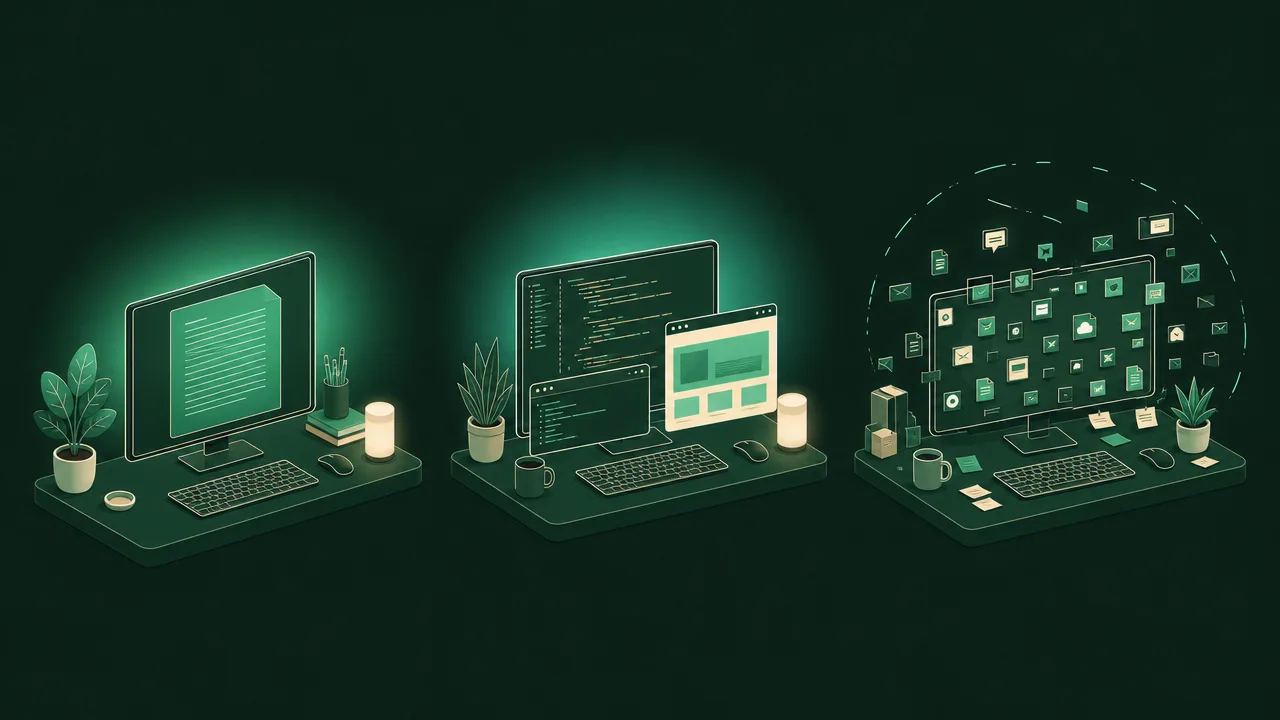
A writer opens their text editor at 09:00 and works on a long article. They check a single reference tab twice, each time for under thirty seconds, then return to the editor. By 10:45 they have one continuous focus block of one hour and forty-five minutes attributed to the editor. The brief tab visits did not end the block, because they fell within the grace window the tracker allows.
A developer alternates between an IDE, a terminal, and a documentation site for two hours of bug-fixing work. If the tracker groups those applications under a single "engineering" task or project, the entire two hours counts as one focus block. If it treats every application separately and uses a strict switching rule, the same period might be recorded as a dozen shorter blocks, none of them long enough to qualify as focus time. The underlying work is identical; the metric changes.
A product manager spends their morning hopping between email, chat, a calendar, and a project board. No single application holds the foreground for longer than five or six minutes. Active time for the morning is high, but focus time is effectively zero. This is the workday-fragmentation pattern the productivity literature consistently warns about.
Misconceptions
The most common misconception is that focus time and active time describe the same thing. They do not. A busy day with many short switches can produce very high active time and almost no focus time. Conflating the two leads to the conclusion that anyone with enough hours at the keyboard is concentrating, which is exactly the misreading the focus-time metric exists to correct.
A second misconception is that focus time should be maximised. There is no evidence that pushing focus time above the four-hour-per-day range produces more or better output for most knowledge work. Beyond that point, additional focus blocks usually represent diminishing returns or, more often, simply working longer hours.
A third misconception is that focus time only counts in deeply cognitive applications. Editing a video, cleaning a spreadsheet, or processing a queue of tickets all produce real focus blocks if the work is sustained. The metric is about continuity, not about how impressive the task sounds.
Related concepts
Focus time sits at the centre of a small cluster of related metrics and ideas. Understanding it well usually means understanding the ones that bracket it.
- Active time: the underlying signal that focus time is built on, with no continuity requirement.
- Deep work: sustained focus time on cognitively demanding, high-value tasks.
- Context switching: how often the foreground application changes, the direct enemy of focus time.
- Attention residue: the lingering cognitive cost of switching away from one task and into another.
- Focus fragmentation: the degree to which a day is broken into many short blocks rather than fewer long ones.
- Session length: the duration of any single continuous period of active use, not yet filtered for focus.
- Foreground application: the window that focus time is being attributed to at any moment.
- Application switching: the count of foreground changes, often used as a fragmentation proxy.
- Workday fragmentation: the wider pattern of meetings, messages, and switches that prevents focus blocks from forming.
- Idle time: the boundary at which an in-progress focus block is closed.
Tracking focus time
Focus time can be measured by any tracker that already records active time and the foreground application. WhatPulse is one such application: it runs locally on Windows, macOS, and Linux, watches which window holds the foreground, and combines that with the idle-aware active-time signal to identify continuous stretches of work against a single application or task.
Because the calculation happens on the device, no network connection is required for the underlying measurement. Users can inspect their longest focus blocks per day, see which applications most often host them, and compare today's pattern with previous weeks or months. The minimum block duration and the tolerance for brief excursions are configurable, so the metric can be tuned to match a person's actual working style rather than an imposed default.
The point of measuring focus time is not to push the number up at all costs. It is to make visible the structural difference between a day spent in long, intentional stretches and a day spent reacting to every ping. Most people do not know, before they look, which kind of day they had.
Frequently asked questions
Is focus time the same as deep work?
No. Focus time is a measurable signal about uninterrupted use of one application. Deep work is a higher-level concept that also requires the task itself to be cognitively demanding and valuable. Most deep work shows up as focus time, but not all focus time qualifies as deep work.
How long must a session be before it counts as focus time?
Thresholds vary by tool. Common minimums sit between fifteen minutes and one hour, with twenty to thirty minutes being a typical default. Anything shorter is usually treated as a regular active session rather than a focus block.
Do quick application switches break focus time?
Most trackers allow brief excursions, for example a quick lookup in a browser tab, without ending the block. Sustained switching to an unrelated application, or one that lasts longer than a small grace window, will typically end the current focus session.
Does focus time include meetings?
A meeting can count as focus time if the video-conference application stays in the foreground and the user is providing some input. Long passive listening usually crosses the idle threshold first and is not counted.
Why is my focus time lower than I expected?
Knowledge work is structurally fragmented. Notifications, quick chats, and tab switches end focus blocks long before they cross any conscious threshold. Gloria Mark's research has found the average attention span on a screen is around 47 seconds, which makes meaningful focus time genuinely rare.
Is more focus time always better?
Not necessarily. Cal Newport argues the practical upper limit for deep focus is roughly four hours per day for most people. Beyond that, additional focus time tends to be lower quality rather than higher output.
Can focus time be tracked privately on a personal computer?
Yes. Focus time is derived from the same local input and window-focus signals as active time, so it can be measured by any local tracker without sending data off the device.
Conclusion
Focus time is the metric that translates raw keyboard and mouse activity into something closer to meaningful work. It measures continuity, not effort, and it is reliable when the rules behind it are understood. It cannot tell anyone whether the work they did was important, but it can tell them whether they actually got the chance to do it without interruption.
Treated as a long-term signal, compared against a person's own history, and read alongside active time and context-switching counts, focus time is one of the more honest numbers a computer-usage tracker produces.