Doomscrolling
Compulsive consumption of negative content via endless scroll.
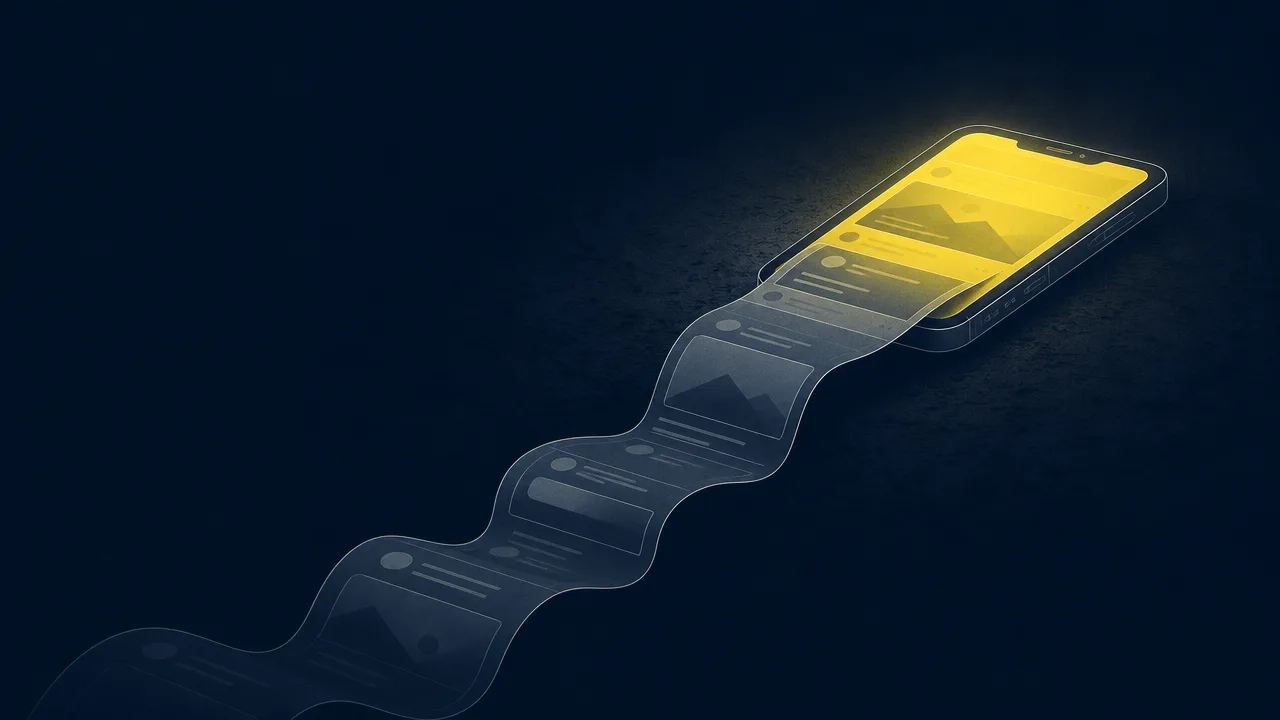
Doomscrolling is the popular name for a very specific behaviour: opening a feed of negative news or social posts, scrolling through it without a goal, and continuing well past the point at which the activity has stopped being informative or pleasant. It usually happens on a phone, frequently late at night, and almost always inside an application built around an infinite, never-ending list.
This page covers where the term came from, why it matters, how the behaviour shows up in usage data, the proxy signals that activity trackers can and cannot see, and the surrounding vocabulary of attention and focus that doomscrolling sits inside.
What is doomscrolling?
Doomscrolling refers to the compulsive, extended consumption of negative or distressing content through a scroll-based interface. The behaviour is defined less by the content itself than by the pattern around it: a long, continuous session inside one application, driven by an urge to keep checking for updates, and ending only when the person is interrupted, exhausted, or has finally fallen asleep.
The earliest known use of the word is a Twitter post from October 2018. The term broke into the mainstream in the first half of 2020, when Karen Ho, then a finance reporter at Quartz, began publicly tweeting daily reminders for her followers to stop doomscrolling during the early months of the COVID-19 pandemic. Her campaign, which was widely picked up by other journalists and outlets, made the word part of the standard vocabulary of the pandemic year. Merriam-Webster added doomscrolling and the related doomsurfing to its Words We're Watching list in August 2020.
The concept has predecessors. The general pattern of compulsive media checking during crises has been studied for decades under labels like crisis news consumption and rumination. The specific contribution of doomscrolling as a word is to tie that older behaviour to a particular interface, the infinite scroll, and a particular device, the smartphone.
Why does doomscrolling matter?
The behaviour matters because it is unusually good at producing time and emotional cost that the person doing it did not intend to spend. A typical doomscrolling session is not a conscious choice to spend ninety minutes reading bad news at one in the morning. It is a five-minute check that drifts, and then keeps drifting, because nothing in the interface signals that it is time to stop.
Research published from 2022 onward has linked sustained doomscrolling behaviour to measurable mental-health costs. A 2022 study led by Bryan McLaughlin at Texas Tech University described a feedback loop in which anxiety drives compulsive checking, which produces more anxiety, which drives more checking. A 2022 paper in Applied Research in Quality of Life introduced a validated Doomscrolling Scale and found associations with psychological distress and lower wellbeing across the personality and social-media-use measures it examined.
Sleep is the most consistently reported casualty. Late-evening scrolling combines screen exposure with emotional arousal from negative content and the absence of an obvious stopping point, and the available research connects all three to shorter and lower-quality sleep. The attentional cost is harder to quantify but easier to feel: time, focus, and emotional bandwidth that could have gone to other things end up spent inside one application instead.
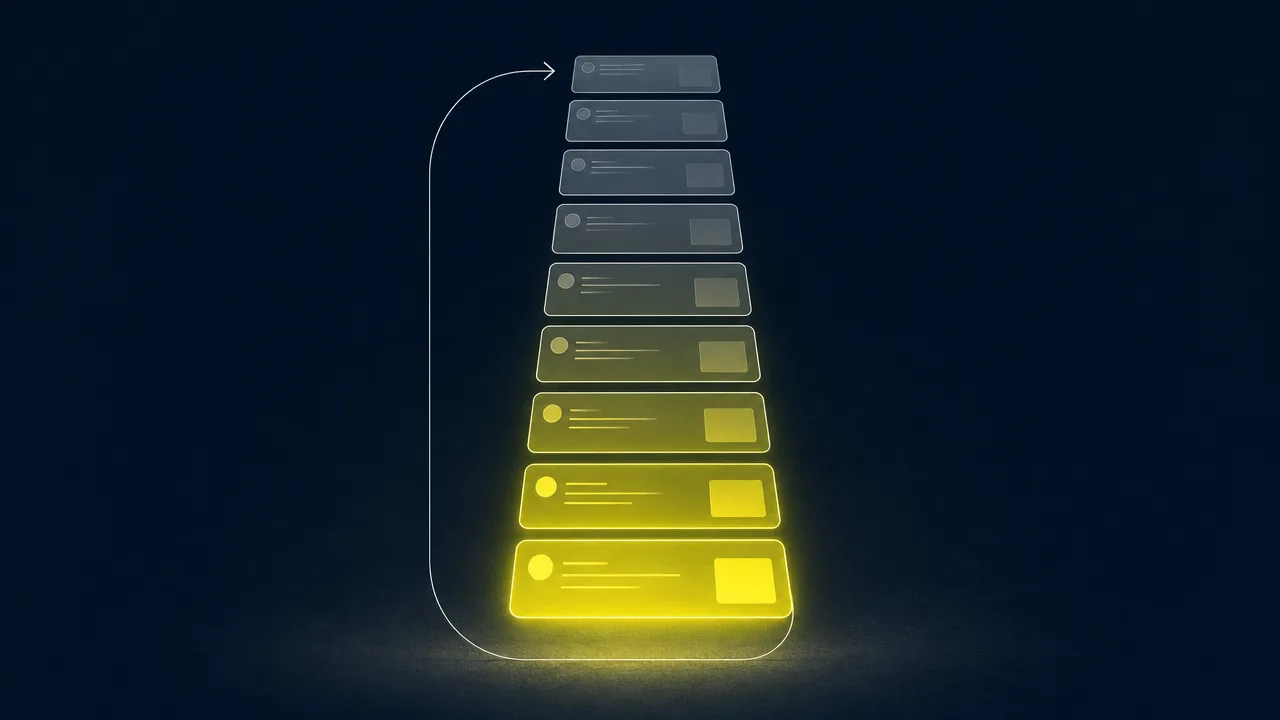
How is doomscrolling identified or measured?
Doomscrolling cannot be measured directly. No tracker can read the content of a feed and decide whether it is upsetting, and even if one could, distress is in the reader. What trackers and researchers actually observe are proxy signals: behavioural patterns that correlate, imperfectly, with the underlying state.
The most common proxy signals are long, uninterrupted sessions inside a single news or social application, a heavy ratio of scrolling to other input, sessions that begin late and run into the night, and a pattern of repeated bounce-backs where the person closes the application and reopens it within a few minutes. The sleep-quality research mentioned earlier uses self-reported survey scales rather than passive measurement, because survey responses can ask about intent and feeling in ways that device telemetry cannot.
Validated research instruments exist. The 2022 Doomscrolling Scale, developed by Seydi Ahmet Satici and colleagues and published in Applied Research in Quality of Life, asks respondents to rate statements about their own behaviour rather than inferring the behaviour from logs. That gap, between what a person reports they are doing and what a device records them doing, is the central difficulty in measuring this particular pattern.
Activity trackers can still contribute. They can show how long an application held the foreground, when in the day the session occurred, and how that pattern is changing over weeks and months. None of that proves doomscrolling on its own, but it gives the person looking at the data something concrete to compare against their own memory of how the time was spent.
Common benchmarks
Strict benchmarks for doomscrolling are scarce, partly because the underlying behaviour is hard to measure and partly because the definition itself is still informal. With that caveat, the most commonly cited reference points are:
- Macquarie Dictionary selected doomscrolling as its 2020 Word of the Year, describing it as a salient marker of a year defined by bushfires, elections, and the pandemic, and a neat name for a recognisable habit.
- Merriam-Webster added doomscrolling and doomsurfing to its Words We're Watching list in August 2020, which the dictionary uses to track terms in rapid mainstream uptake.
- The 2022 Doomscrolling Scale paper in Applied Research in Quality of Life reported significant associations between doomscrolling scores and measures of psychological distress, fear of missing out, and reduced life satisfaction in its sample.
- A 2025 American Academy of Sleep Medicine poll found that around 38% of US adults said that using a phone or tablet to read the news before bed was making their sleep slightly or significantly worse.
These figures describe populations rather than individuals, and the underlying definitions vary between studies. For any one person the most informative comparison is their own pattern over time rather than a headline benchmark.
Examples
A few worked scenarios show how the behaviour appears in practice.
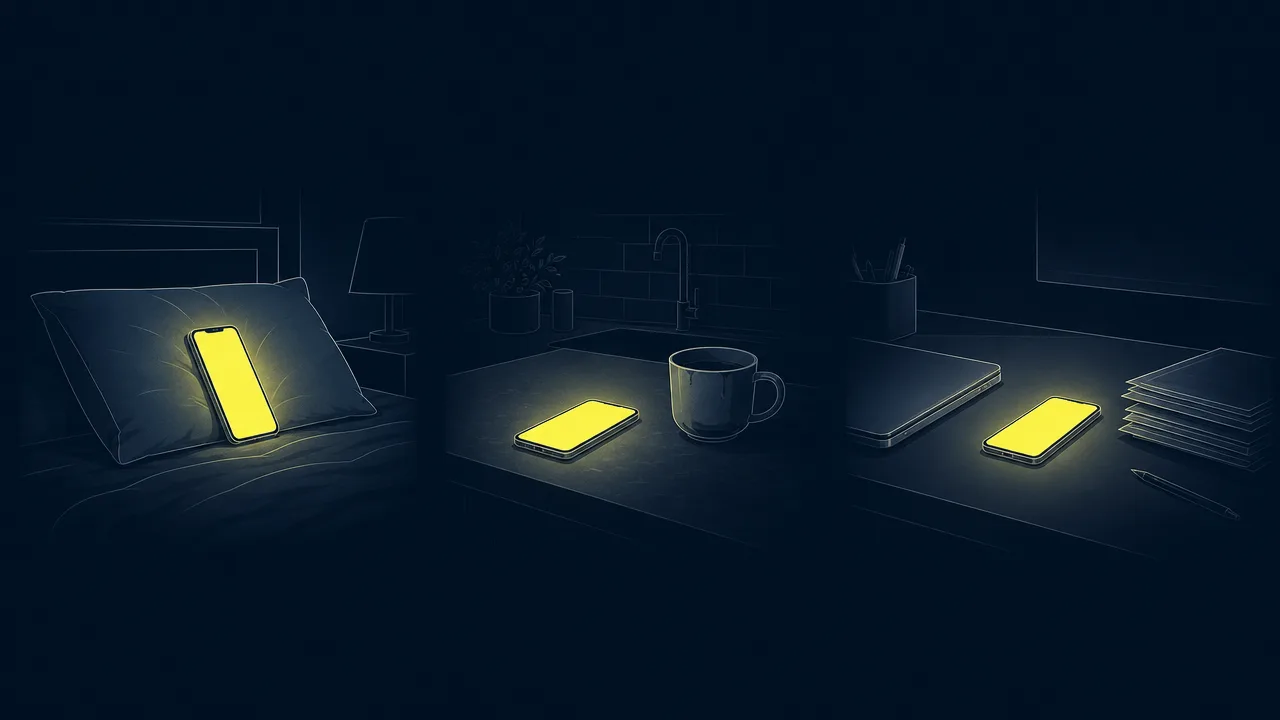
A reader opens a news application at 23:15 to check a developing story they saw earlier in the day. They read the lead article, then a related one, then a third one from the sidebar. The feed loads more items automatically. By 00:40 they are still in the same application, three hundred items deep, and have forgotten what they originally came to look up. Nothing in the interface marked the boundary between checking the story and the long session that followed.
A user opens a social platform at lunchtime to reply to one direct message. While waiting for a colleague to respond, they begin scrolling the feed. The feed mixes friends' posts with reshared news clips, and most of the news is bad. Forty-five minutes later the colleague's reply arrives and they realise the lunch break is over. The session was not planned and the user could not give a single sentence summary of what they had read.
A reader experiencing anxiety about a single ongoing event, an election, a war, or a personal crisis, reloads the same two applications every few minutes throughout the evening. Each session is short, but together they account for several hours and produce a pattern of repeated bounce-backs that is characteristic of compulsive checking rather than ordinary news reading.
Misconceptions
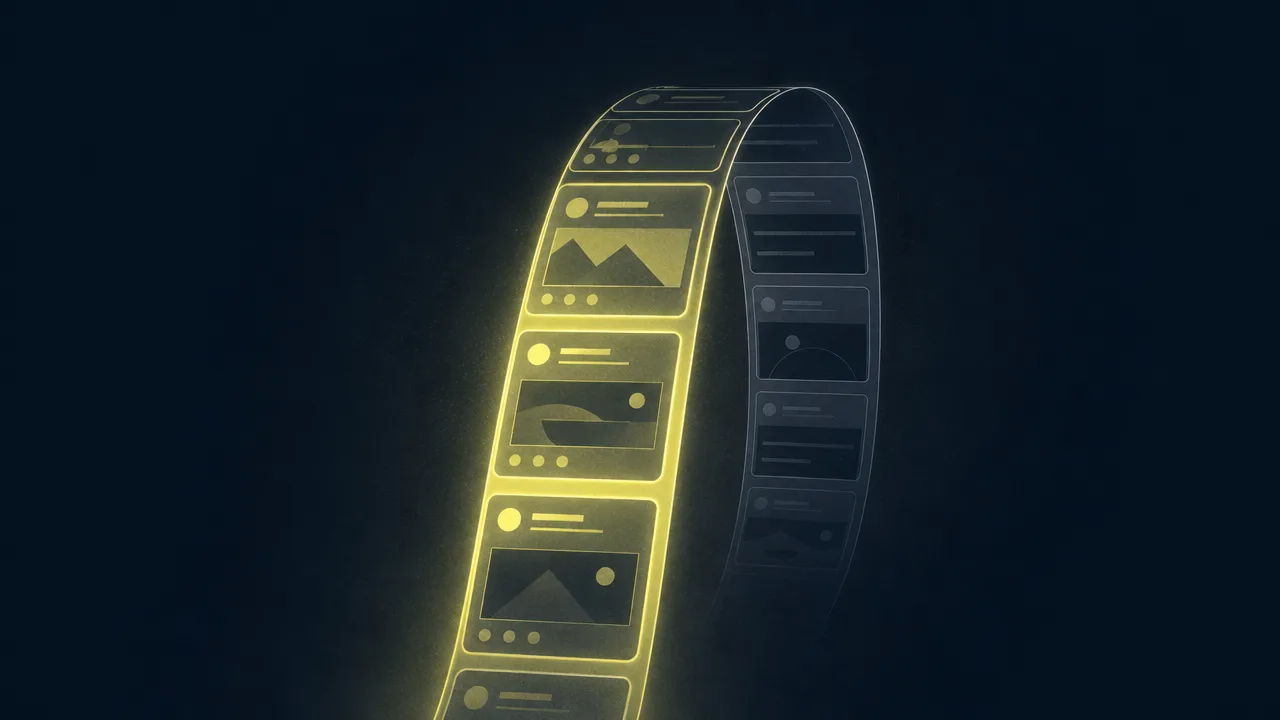
The most common misconception is that any heavy consumption of news qualifies as doomscrolling. It does not. Sitting down to read a long article, listening to a podcast, or watching a documentary about a difficult topic is not the behaviour the term was coined to describe. Doomscrolling is specifically the open-ended, scroll-driven version of media consumption, in which the user keeps going because there is always one more item below.
A related error is to blame the user alone. The behaviour is shaped, deliberately, by the interface. Infinite scroll, the design pattern invented by Aza Raskin and now central to almost every social and news feed, was introduced to remove the friction of clicking next. It also removed the natural stopping cue that came with the page break. Raskin himself has spoken publicly about regretting the pattern's contribution to compulsive use and now works with the Center for Humane Technology on alternatives.
A third misconception is that reading bad news, on its own, is the problem. The doomscrolling literature consistently points to the combination of negative content with infinite-scroll mechanics and late-night timing, not to the content alone. The same person reading the same articles in a different format would likely not display the same behavioural or sleep effects.
Related concepts
Doomscrolling sits inside a small cluster of related ideas. Understanding it well usually means understanding the surrounding vocabulary.
- Notification fatigue: the dulled response to alerts that often precedes the late-night session.
- Digital overload: the broader state of being saturated by inputs across many tools at once.
- Screen fatigue: the cumulative cost of long display-bound sessions, regardless of content.
- Tab hoarding: a related compulsive-checking pattern on desktop rather than mobile.
- Context switching: the cost incurred when a doomscrolling session interrupts other work.
- Application usage: the foreground-time measurement that surfaces long single-app sessions.
- Idle time: the metric that catches stretches of low input that still register as foreground time.
- Attention residue: the lingering cognitive cost of a session that ended without a clean break.
- Focus fragmentation: the broader pattern of focus being broken up across many short sessions.
Tracking doomscrolling
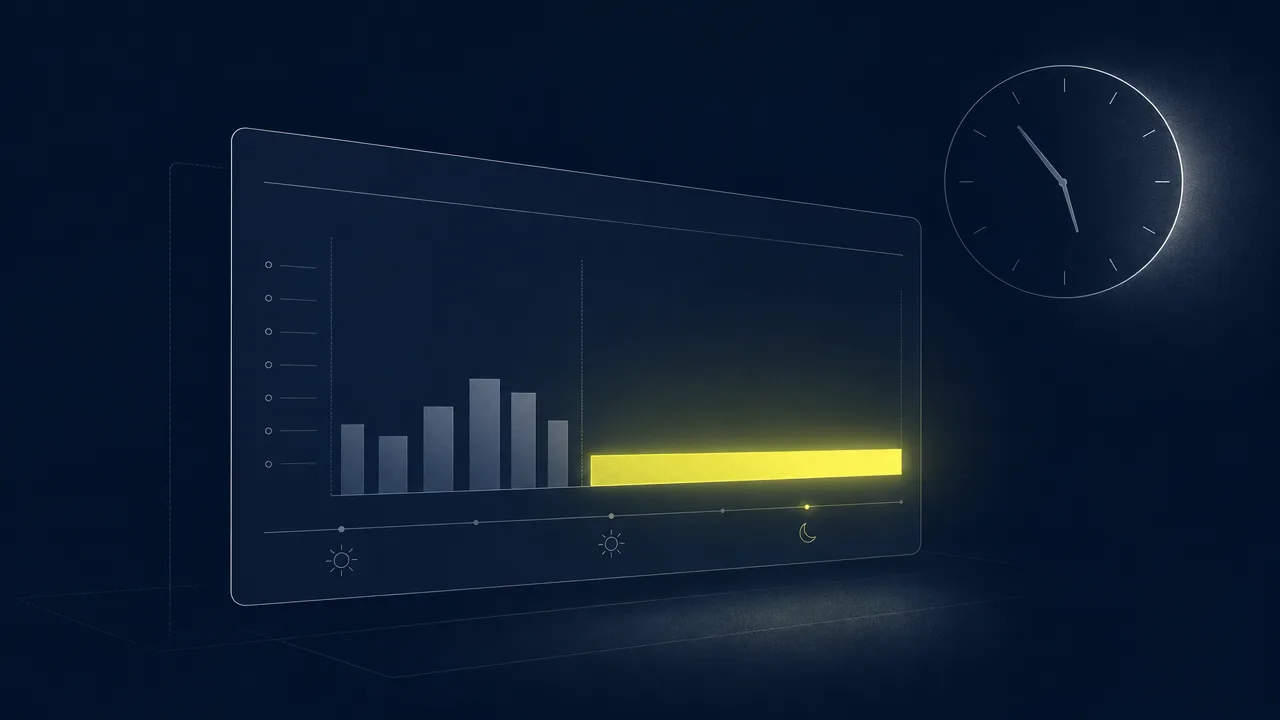
A computer-activity tracker cannot detect doomscrolling. What it can do is surface the behavioural shadow that the activity casts. A long, continuous session inside a news or social application, late in the day, with little input variety, is what the underlying behaviour looks like from the outside. The tracker records the shape; the person reading the data fills in the meaning.
WhatPulse is a local-first computer-activity tracker that runs on Windows, macOS, and Linux. It records which application is in the foreground, for how long, and against which input. On a desktop or laptop it cannot see a phone session, which is where most doomscrolling happens. It can, however, show the same pattern when it occurs on the larger screen, for example a long evening browser session inside one news site or one social platform, separated cleanly from the daytime work session that preceded it.
The honest framing is that trackers flag time on application, not intent. Two identical session lengths can be a deliberate hour of catching up on a subject the user cares about, or an unintended hour of drifting through a feed. The tracker cannot tell those apart, and it is not supposed to. Its job is to give the person a stable baseline so that they can decide which sessions were the ones they meant to have.
Frequently asked questions
Is doomscrolling the same as reading the news?
No. Reading the news has a beginning, a middle, and an end. Doomscrolling is the open-ended pursuit of more bad news through an interface designed to never run out, usually without any goal beyond the act of scrolling itself.
Who coined the term doomscrolling?
The earliest known use is a tweet from October 2018, but the term entered mainstream use in 2020 when Quartz finance reporter Karen Ho began publicly tweeting daily reminders to stop doomscrolling during the early months of the COVID-19 pandemic.
Was doomscrolling really a Word of the Year?
Yes. The Macquarie Dictionary selected doomscrolling as its 2020 Word of the Year, and Oxford Languages included the related cluster of pandemic-era terms in its 2020 commentary on the year in language.
Why does doomscrolling feel so hard to stop?
Infinite-scroll interfaces remove the natural stopping cues that older media had, such as the end of a page or a programme. Aza Raskin, who invented infinite scroll and now works with the Center for Humane Technology, has publicly described it as a pattern that quietly removes the moment when a person would otherwise pause and decide whether to continue.
Does doomscrolling affect sleep?
Studies consistently associate late-night scrolling with worse sleep quality. A 2025 study in BMC Psychology examined the link between doomscrolling, fear of missing out, nomophobia, and poor sleep, and found significant associations across all three. The mechanism is a combination of screen exposure, emotional arousal from negative content, and the absence of a clear stopping point.
Can an activity tracker tell that I am doomscrolling?
Not directly. A tracker can see that a social or news application was in the foreground for a long, continuous stretch, often late at night, and that input was sporadic and scroll-heavy. It cannot see what was on the screen or why the person kept reading. The classification is always a guess from proxy signals.
Is doomscrolling a clinical diagnosis?
No. It is a popular descriptive term, not a recognised mental-health diagnosis. It overlaps with broader research on problematic social-media use and compulsive information seeking, but it is not itself a category in clinical manuals.
What is the difference between doomscrolling and digital overload?
Digital overload describes the general state of being swamped by inputs from many tools and channels. Doomscrolling is a specific behaviour within that environment, focused on negative content and infinite-scroll feeds, and usually on a single application at a time.
Conclusion
Doomscrolling is a precise name for a recognisable habit: the open-ended consumption of negative content through infinite-scroll interfaces, usually on a phone, often at night, and rarely with a clear point at which the person intended to stop. The word entered the mainstream in 2020 through Karen Ho's public reminders, was selected by Macquarie Dictionary as its Word of the Year for that year, and has since accumulated a small but growing research literature linking the behaviour to lower wellbeing and worse sleep.
Activity trackers cannot see the behaviour itself. They can surface the long, late, single-application sessions that the behaviour usually produces, and they can show how that pattern is changing over weeks and months. Treated that way, as a baseline rather than a verdict, the tracker becomes a quiet check against the kind of evenings that the person scrolling through them did not really mean to spend.